For decades, the backbone of the Philippine hauling industry was the “Japanese Surplus” truck. These reconditioned units from Japan were the go-to choice for small-to-medium contractors because of their low initial price and the familiarity of their mechanical systems.
However, as we enter 2026, the landscape of Philippine infrastructure has shifted. The “Build Better More” program and stricter Department of Transportation (DOTr) regulations on vehicle age and emissions (Euro IV/V) have changed the math. Today, a truck is no longer just a vehicle; it is a financial instrument. If it isn’t running, you aren’t just losing time—you are losing your place in the competitive market.
This guide explores the Total Cost of Ownership (TCO) comparison between the legendary SHACMAN H3000 and the traditional surplus truck, proving why “new” is the only way to grow in 2026.
The Fuel Economy Gap: The Difference Between Profit and Loss
Old Mechanical Technology vs. Modern Common Rail
Most Japanese surplus trucks arriving in the Philippines utilize 15-to-20-year-old engine designs. These are purely mechanical engines that were built for a different era of fuel pricing.
-
The Surplus Reality: Older engines suffer from “fuel spray” inefficiencies. Over time, worn-out mechanical injectors lead to incomplete combustion, visible black smoke, and a 10-15% drop in mileage.
-
The SHACMAN H3000 Edge: The H3000 is powered by the Cummins ISM11 Euro IV engine. It uses a high-pressure common-rail system controlled by a Celect™ electronic module. This ensures that every micro-drop of diesel is injected at the precise millisecond for maximum explosion and zero waste.
The Math: If a surplus truck gets 2.5 km/L and the SHACMAN H3000 gets 3.2 km/L, on a 200km daily route, the SHACMAN saves 17.5 liters of diesel per day. At ₱60/liter, that is ₱1,050 per day in direct savings. Over a 25-day working month, the SHACMAN saves you ₱26,250 in fuel alone—enough to pay a significant portion of a monthly bank amortization.
Payload Economics: The "Revenue Per Trip" Advantage
A truck is paid by the volume it delivers. If you are hauling aggregate for a DPWH project, your revenue is tied directly to your cubic meter ($m^3$) output.
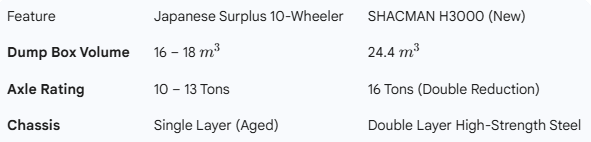
Why "Over-Spec" Matters
The "Hidden" Cost of Downtime: 75% Uptime vs. 98% Uptime
Downtime is the “silent killer” of Philippine contractors. When a surplus truck breaks down on a job site in the mountains of Bukidnon or the quarries of Rizal, the costs ripple:
-
Lost Revenue: ₱10,000–₱15,000 per day.
-
Driver Idle Pay: You still have to pay your crew.
-
Project Penalties: Late deliveries can lead to DPWH liquidated damages.
-
The “Scavenger” Search: Finding a specific 2008 transmission gear often means calling every surplus yard from Subic to Davao.
The "Premier" Uptime Guarantee
As John Paul Abines of Refuge Construction Services shared, the difference is the support.
“Reliability is good… but the after-sales is where Premier excels. They respond immediately… they even sent specialists to our site. For us, Premier is family.” — Refuge Construction Services
Safety and Driver Retention in 2026
In 2026, finding and keeping good heavy-duty drivers in the Philippines is harder than ever. Many are moving to overseas jobs or choosing employers who provide better working conditions.
-
Surplus Comfort: Most surplus trucks have non-functional A/C, manual steering that requires “wrestling,” and seats with zero suspension. A tired driver is a dangerous driver.
-
SHACMAN H3000 Comfort: The H3000 features a cabin based on the MAN TGS platform. It includes:
-
Hydraulic Suspension Seats: Absorbs the jolts of unpaved roads.
-
Tropicalized A/C: Built to handle the $38^\circ C$ Philippine humidity.
-
Safety Cell: Robot-welded steel plates that have passed the European ECE-R29 collision test.
-
When you provide a better “office,” your drivers are more productive, take better care of the equipment, and are less likely to leave for a competitor.
Resale Value: The Exit Strategy
Every smart business owner looks at the “exit.” What is the truck worth after 5 years of service?
-
Surplus Resale: A 15-year-old surplus truck that has been used for another 5 years in the Philippines has almost zero resale value. It is often sold as “scrap” or for parts.
-
SHACMAN H3000 Resale: Because SHACMAN is now the #1 Chinese truck brand in the Philippines, there is a massive secondary market. A 5-year-old H3000 with a documented “Premier Service” history retains a high percentage of its value, which can be used as a down payment for your next fleet upgrade.
Compliance: The "No-Contact Apprehension" and Emissions Era
The DOTr and LTO are becoming increasingly aggressive with the Public Utility Vehicle Modernization Program (PUVMP) and similar standards for commercial trucks.
-
Registration Hurdles: Many older surplus units struggle to pass the newer, automated MVIS (Motor Vehicle Inspection System) tests due to emissions or structural rust.
-
SHACMAN Compliance: The H3000 is Euro IV compliant out of the box. It meets all 2026 Philippine road standards, ensuring you never face a “refusal to register” or “excessive smoke” apprehension.
ROI Comparison: A 3-Year Projection (10-Truck Fleet)
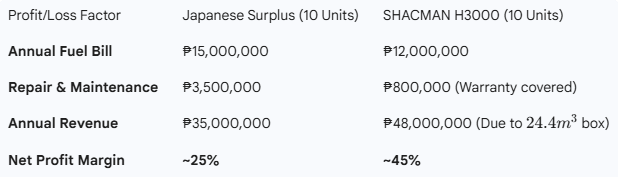
Conclusion: Stop Repairing, Start Growing
The decision to buy a SHACMAN H3000 over a Japanese surplus truck is the decision to move from a “survival mindset” to a “growth mindset.” While the surplus truck might save you money on Day 1, the SHACMAN H3000 makes you more money on Day 100, Day 500, and Day 1,000.
With the power of Cummins, the strength of HANDE, and the support of Premier Heavy Equipment, the H3000 is the only truck built for the future of the Philippines.
Build your legacy on a solid foundation.
View the SHACMAN H3000 Inventory | Request an ROI Consultation
Frequently Asked Questions
How much horsepower does a Shacman H3000 have?
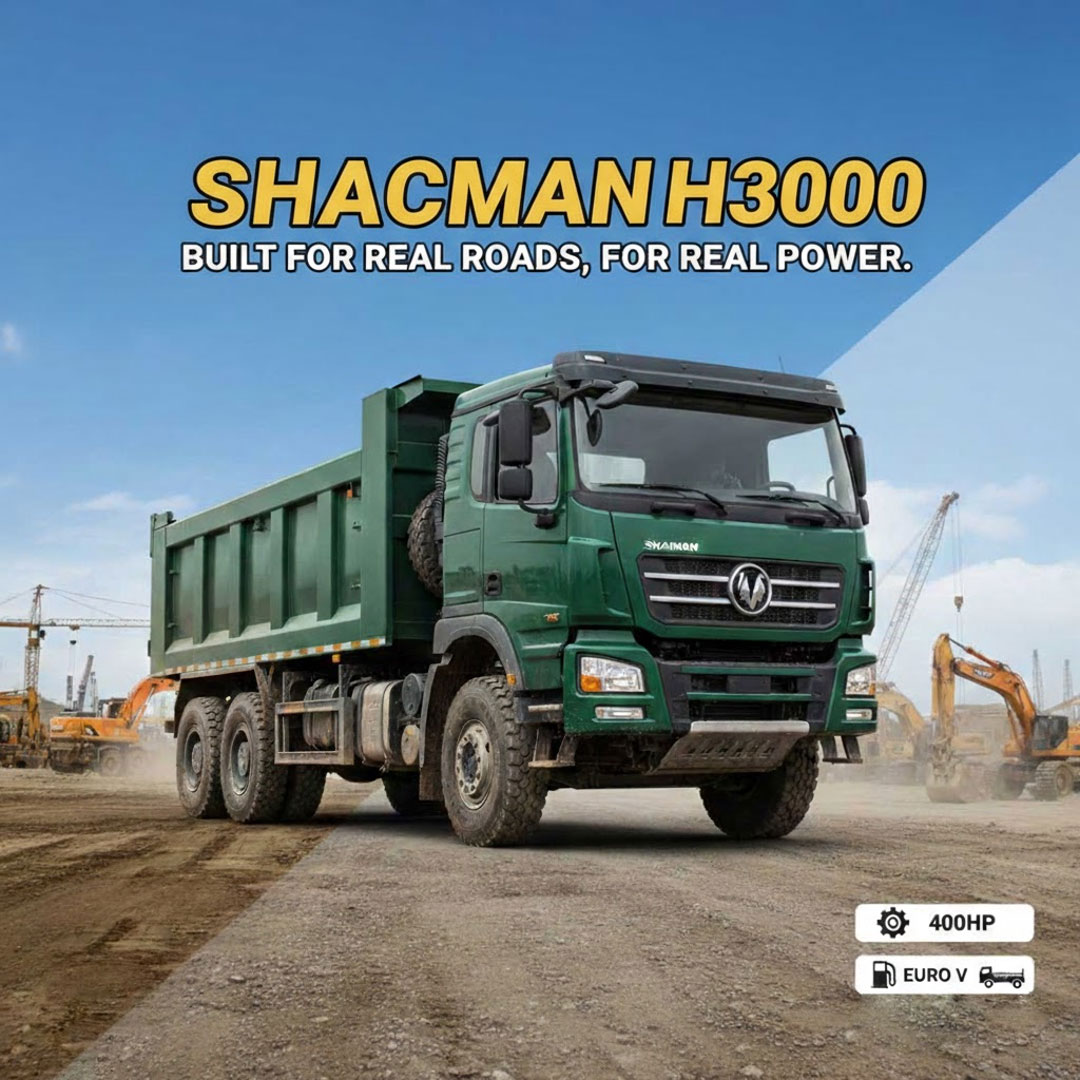
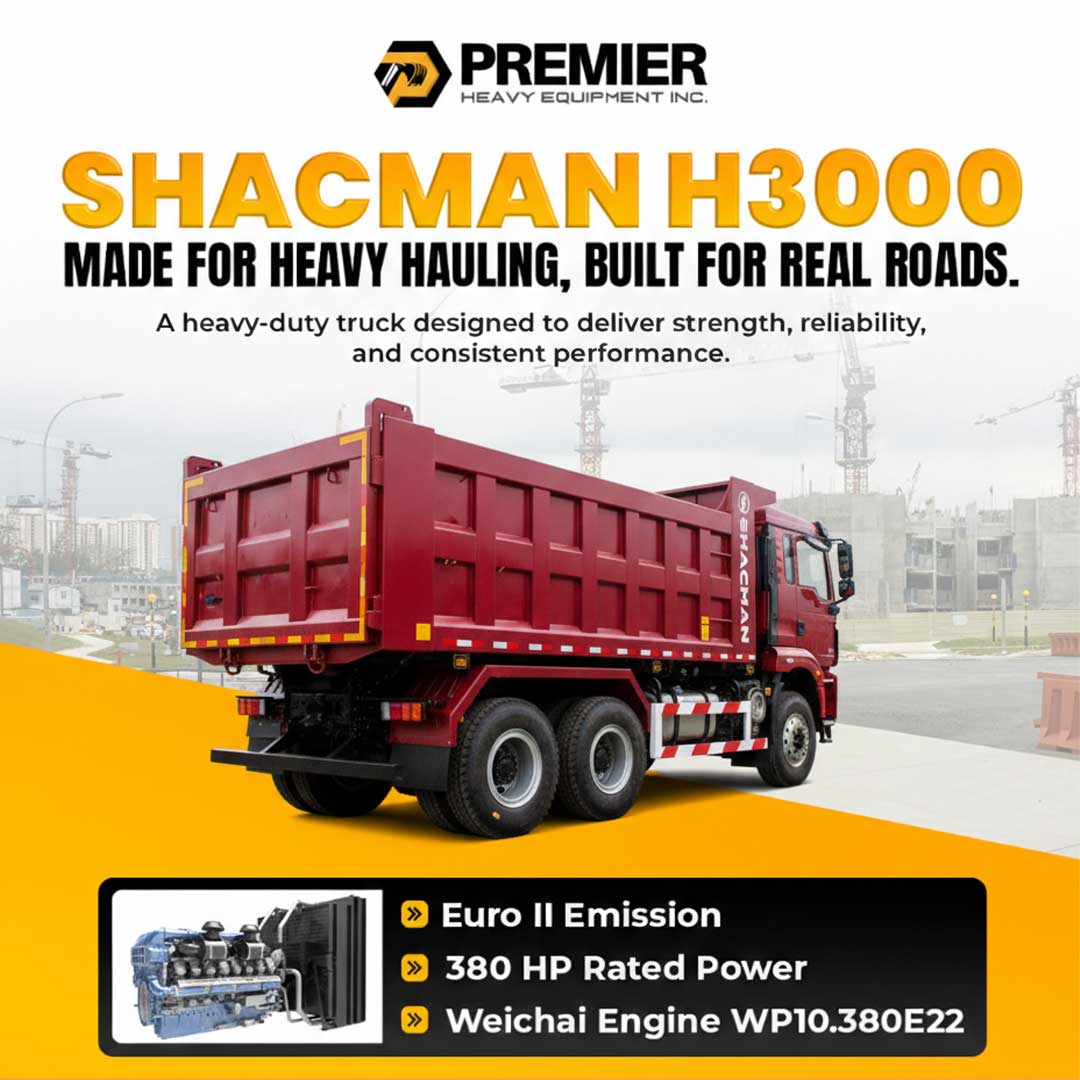
The SHACMAN H3000 is powered by the Cummins ISM11E4 385 turbocharged diesel engine producing 385 horsepower (287 kW) from 10.8 liters (10,800cc) displacement.
What is the difference between Shacman F3000 and H3000?
F3000 works as a durable, cost-smart workhorse for mixed jobs. H3000 fits balanced efficiency and value in medium-to-heavy logistics. X5000 offers a premium, long-haul focus. It stresses aerodynamics, comfort, and smart features.
Who is the owner of Shacman Motors?
The Shacman Company is owned by Shaanxi Automobile Holding Group. Shaanxi Automobile Holding Group was founded in 1968 and is located in Xi’an, Shaanxi Province. It is a major enterprise in the Chinese automotive industry.
What engines do Shacman trucks use?
Shacman trucks can use engines from Weichai, Cummins, MAN, Yuchai, and Hino. Common series include Weichai WP10/WP12/WP13, Cummins ISM/ISX, and MAN D08. Each one targets specific jobs.
Is Shacman a good truck?
SHACMAN is a well-known brand in the field of heavy trucks, and it has certain advantages and characteristics, which can be considered a good truck brand in many aspects: l Product Line and Customization: SHACMAN offers a rich product line, covering various models and series to meet different transportation needs.